

Chiapas has been one of the most memorable places I’ve visited, and one of the few locations that I can’t wait to return to as soon as possible. Yesterday, I had one of the most culturally enriching days in my life because I had the honor of spending Día de Muertos (Day of the Dead) with my friend Juanita’s family in Zinacantán. They refer to this joyful celebration as Día de Todos Los Santos (Day of all Saints); and like many Mexican people, they believe that it’s a time when our ancestors visit us.
It was my first time spending this holiday in México since my family and I immigrated to the US, and I was excited to celebrate traditionally. My friend Juanita graciously invited me to the cemetery with her in-laws on the second day of the festivities, and I felt overwhelmed with joy and gratitude for being welcomed into such an intimate setting.
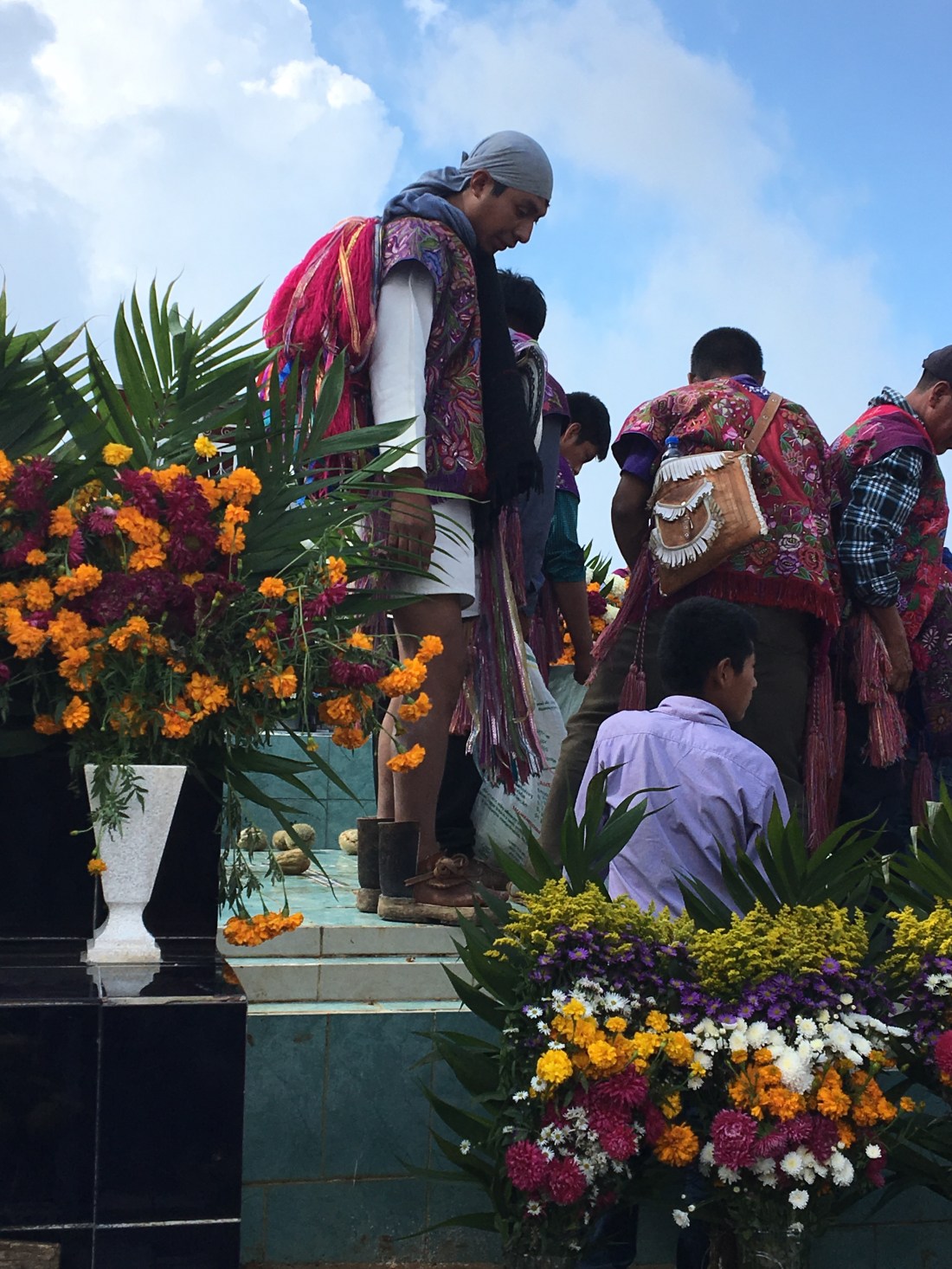
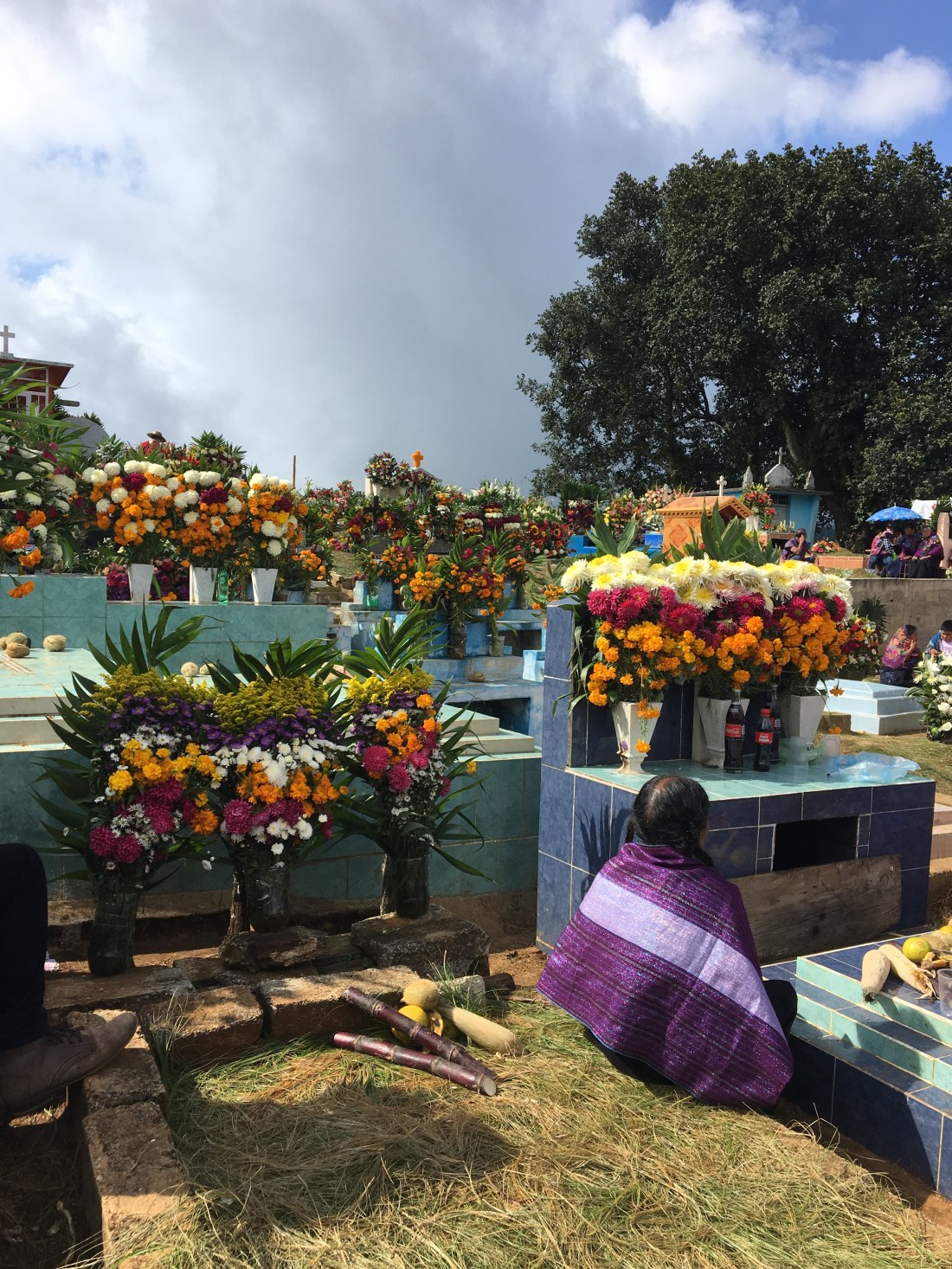
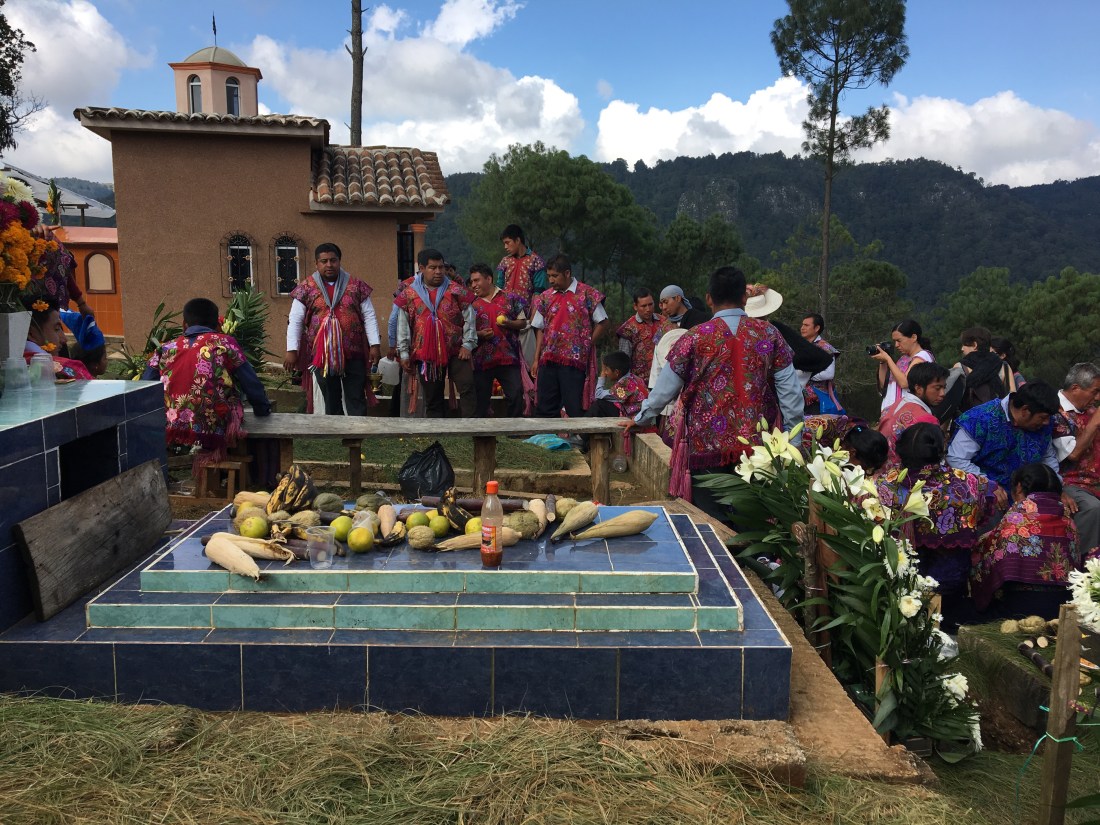
The cemetery was filled with bright flowers and the people’s attire was beautiful! The people from Zinacantán had been there since 7am eating, drinking and enjoying each other’s company. I arrived at 10am and was welcomed by Juanita’s in-laws (parents, siblings and extended family).
In the afternoon, a crew filming for a TV series that aims to highlights Mexico’s rich culture, asked Juanita’s father-in-law, Señor Antonio, for an interview. They wanted to learn more about the beliefs and traditions of Zinacantán and incorporate his voice in the film. I was lucky enough to hear the interview which was filled with history and gems that I would have not known otherwise. Here’s a rough recap of what he shared:
SCHEDULE:
1 week before Día de Todos Los Santos (celebrated November 01 and 02):
- The people from the community clean the cemetery.
- The people also clean their homes paying special attention to where the altar will go.
- Each family divides the chores that need to get done for the celebration, and they decide who will be responsible for adorning each grave.
- They order flowers and start buying food.
October 31:
- Men go to the cemetery to install flowers and adorn the graves.
- Women prepare food: corn, chayotes, atole, bananas, oranges, meat, etc.
November 01:
- By 3am, the altar in each house needs to be installed.
- Cempasuchil flowers (marigolds) guide the souls to the living world.
- Candles guide the souls to the home of their loved ones.
- The food on the altar welcomes the souls. Typically, families prepare what their loved ones liked to eat when they were alive.
- During the day, the people from the community go to the cemetery to gather at the graves. They eat and enjoy each other’s company.
November 02:
- Community members go back to the cemetery around 7am to continue the celebration.
- There, they wait for the community’s male leaders to go around and give a blessing at each grave site. The leaders sing the blessing in Latin, and this is supposed to guide the souls back to their body.
- After the men complete the blessing, the family members of the deceased offer them beer or food to thank them. Because of this, the process can be pretty long. There is no schedule, and everyone must wait their turn.
- Once their ancestors have been blessed, the community members return to their homes to have dinner.
- In the meantime, assistants pick up all the food that was left on the graves as offerings (e.g bananas, sugar cane, oranges and corn).
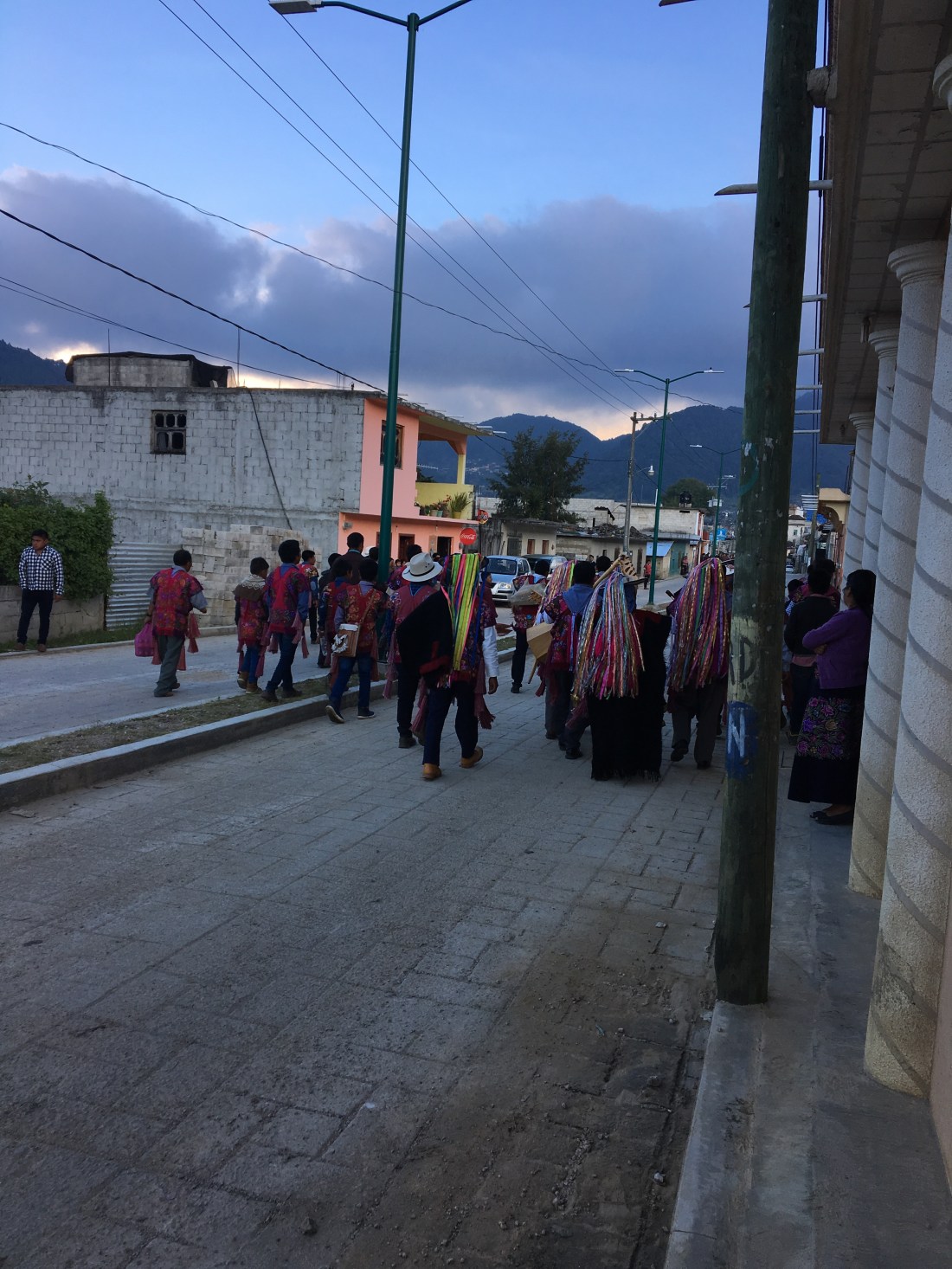
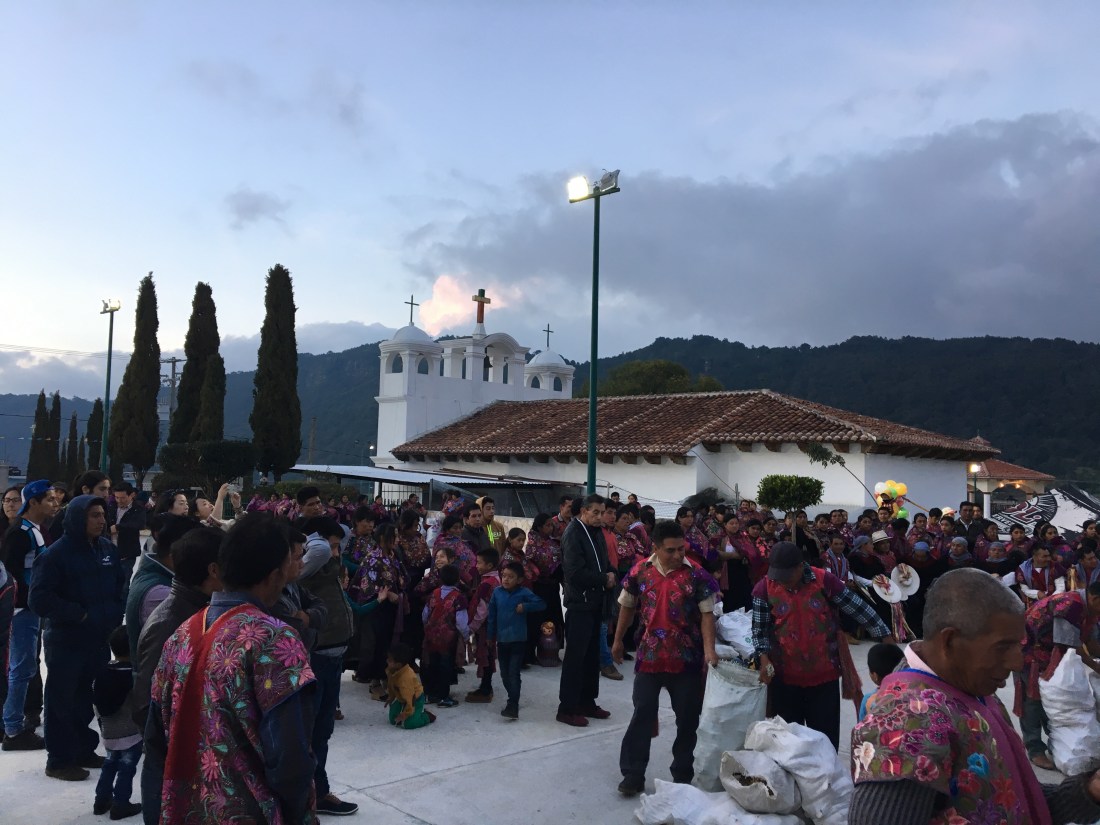
- Finally, once the leaders bless every grave, they go dancing through the town and make their way to the church. There, they hand out all the food they collected at the cemetery. Since many families don’t have enough to eat, they make sure that none of the food is wasted and that everyone who wants food gets a sack to take home.
THEME: While Day of the Dead or Day of All Saints may sound like a sad day, it’s actually a happy celebration. People are excited to welcome their loved ones and feel their presence nearby. People do not fear the dead; instead, they ask for their guidance and support.
TEXTILES: The traditional attire of Zinacantán is colorful and adorned with flowers. This attire is representative of this particular town, their culture and their language.
Don Antonio finished his interview by confidently stating that the people of Zinacantán celebrate Dia de Todos Los Santos con “gracia, amor y orgullo” (with grace, love and pride).
 Trails And Travels