

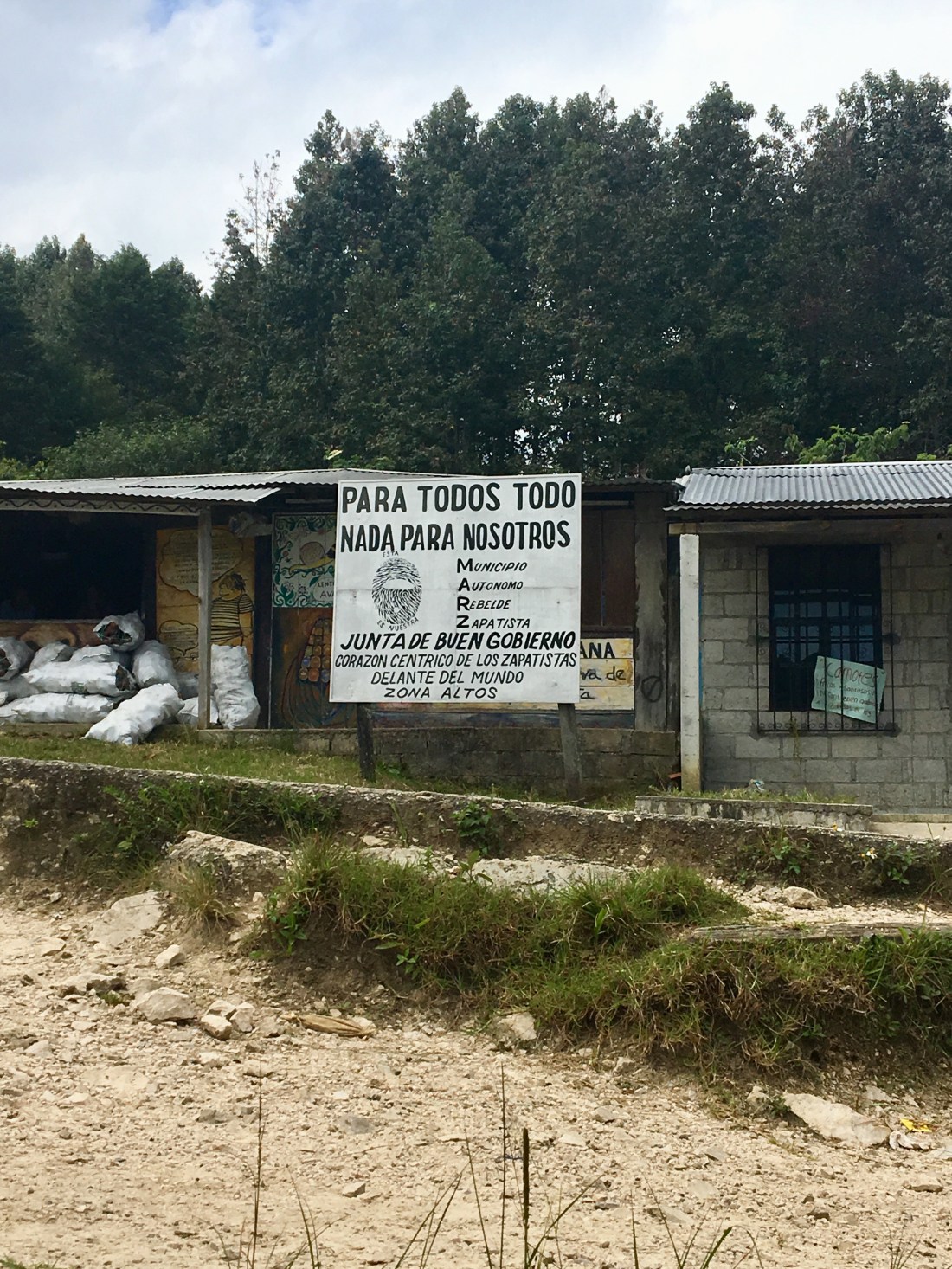
Since arriving in San Cristobal de las Casas in the state of Chiapas, I have learned a lot about the Zapatistas and their fight for indigenous rights.
On January 1, 1994, Mexico joined NAFTA (the North American Free Trade Agreement). The Zapatistas rebelled against NAFTA because the indigenous people who’d worked on the land for centuries would not be able to compete with global companies. They took over San Cristobal and other towns in Chiapas to fight for their rights and bring light to the terrible conditions where they lived and worked. The Mexican government has largely ignored indigenous communities and the fact that they don’t have access to clean water, electricity schools, hospitals and other basic necessities.
The Zapatistas named themselves after Emiliano Zapata, a peasant leader and Mexican revolutionary who fought for the transfer of hacienda land to the people who worked on the land. His motto was “Land and Liberty!” Zapatistas often cover their nose and mouth with a red handkerchief or wear a black mask that only shows their eyes.
I watched two documentaries about the Zapatistas at a local cinema and felt immensely moved by their mission. The documentaries showed former Mexican presidents vilify the Zapatistas even though the Zapatista movement had a lot of support from the Mexican people. I also learned about massacres against indigenous people and how the Mexican government went back on their promise to negotiate with Zapatistas. After reading about the movement, talking to local people and watching the documentaries, I wanted to visit a Zapatista community.
On Friday, October 26, I went to Oventic with four friends from my hostel. Oventic is an autonomous mountainous village outside of San Cristobal that serves as one of the headquarters for Zapatistas. This is one of the few Zapatista towns where travelers can go, and I was intrigued to visit. Because they are autonomous, they decide who can enter and who can’t. (Anyone affiliated with the Mexican government or police force is denied entry.)
After giving our full name, country of origen, profession and company name, the young man who took our information went inside the town. 5 minutes later, he returned and said we were not allowed in. He explained that the people in the village were preparing for a cinema festival and could not greet us. I was surprised to hear that he wouldn’t let us in, and I asked if we could just go in to buy a book that I’d been recommended. I explained that I wanted to support the community, and I wouldn’t take very long. He said no and asked us to return in November once visitors would be allowed in.
I was frustrated that we’d driven over an hour to get to the town, and I didn’t believe the man’s explanation. I questioned why he took down all of our information before telling us we couldn’t enter and even felt betrayed that he wouldn’t allow a fellow countrywoman in. My friends and I kept coming up with theories as to why we were rejected, but we couldn’t come up a reasonable explanation.
I then heard myself say things that made me realize how arrogant I was being. I said things like, “I can’t believe they would not let me in!” or “I was going to spend money and support the cause!” As soon as I heard myself say those sentences, I understood that I had no right to be mad. I was acting entitled, and I was upset that I didn’t get something I wanted. I immediately put myself in their shoes and caught a glimpse of what it may be like to constantly be ignored and denied civil rights and basic resources.
I shifted my mindset quickly, and rode back to San Cristobal wondering if I would return. After arriving back at the hostel later in the evening, I found out that my friend’s friend was allowed in that same day! While I was very disappointed, I tried keep myself from being mad. This experience humbled me and reminded me that my feelings toward Zapatistas should not change simply because I didn’t get to step inside one of their communities. I am not sure if I will try a second time; but if I do, I will make the trip alone.
I encourage anyone reading this to learn more about the Zapatista movement. Lonely Planet recommends two books: The Zapatista Reader and Homage to Chiapas: The New Indigenous Struggles in Mexico.
I leave you with this quote by Subcomandante Marcos:
“Y miren lo que son las cosas, para que nos vieran, nos tapamos el rostro; para que nos nombraran, nos negamos el nombre; apostamos el presente para tener futuro; y para vivir…morimos.”
“Look how things are, to be seen, we cover our faces; to be acknowledged, we deny ourselves a name; we bet the present to have a future; and to live … we die.”
 Trails And Travels