

After a few days soaking up the sun on the Oaxacan coast, I made it to San Cristóbal de las Casas in the state of Chiapas. Chiapas is the state where the Tzotzil women who I was working with at Yo’on Ixim are from. It’s also a state with rich Mayan traditions and “the heart of one of the most deeply rooted indigenous areas in Mexico” (according to Lonely Planet). Here you can see people dressed in traditional attire, hear different languages and observe beautiful ancestral handiwork.
Yesterday, I had the opportunity to visit San Juan Chamula, a town known for its “fiercely independent Tzotzil group” (Lonely Planet). Since it was Sunday, they were holding a big market in the center of town where people from the mountains go to trade and buy. What impressed me the most was the church in this town, Templo de San Juan.
Photography is strictly forbidden inside the church, but here’s a picture of the courtyard.
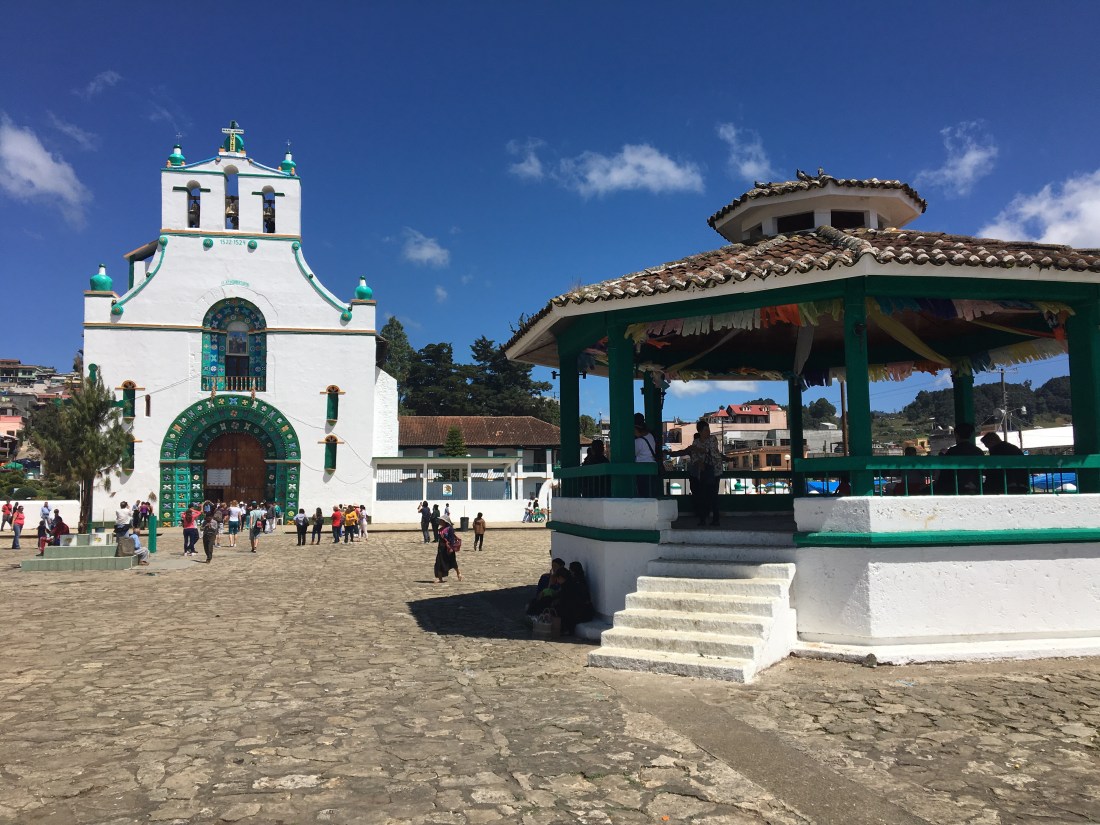
I have never been in a church like this before! The outside looks like a Catholic church, but the inside is surreal.
The floor is covered with green, fresh pine needles. There are more than 40 saints adorning the walls of the church, and at the front of the church is the statue of St John the Baptist (who the people of Chamula revere more than Christ). The saints also carry small mirrors. These mirrors are for worshippers to see themselves as they pray so they don’t lie to themselves (that’s deep!).
There is no light overhead; instead, thousands of candles flicker inside. There are also no pews. People worship on their knees and either face the front of the church or pray to a saint lined against the wall. People clear pine needles where they pray, and they place candle sticks on the tile. Then they light the candles and pray as the candles burn. I saw families burning anywhere from 6 to hundreds of candles! After the families leave, someone comes around and clears the wax from the tile so other people can use the space.
The church is warm inside, and it smells of pine and copal incense. There are also healers who do cleansings inside the church. I did not witness a cleansing, but a healer asked if I wanted one. I believe the cost is about $11USD. Healers often use eggs or animal bones in their practice.
There is no schedule for prayer and people come when they want. They also stay as long as they want. Most families I saw were there from 30 minutes to an hour. Worshippers also bring Coca Cola or pox, alcohol made from sugarcane, and drink as they pray. People of Chamula believe that burps expel evil spirits.
…
More than observing a vastly different way of worshipping, I got to witness the intersection/clash of cultures and religions. This was one of the most memorable experiences I’ve had.
 Trails And Travels